
Often when I meet with a client for trauma therapy, within the first few sessions they will say, “I thought I already worked through this.”
My response is always the same: You did. And trauma often has layers.
Especially with Complex Post-Traumatic Stress Disorder (C-PTSD), healing is rarely a one-time event. Complex trauma develops from repeated wounds — often beginning in childhood — and those wounds shape the way we see ourselves, others, and even the sacred. Over time, painful beliefs can take root: I’m not enough. I’m not lovable. I’m not worthy.
But beneath those wounds, I believe there is still a core self that is whole — a steady, wise presence within you that trauma could not destroy.
Because C-PTSD is multilayered, healing unfolds gradually. We peel back one layer, tend to it with compassion, allow space for integration, and then — when we are ready — we gently explore the next. There is a rhythm to this work. A sacred pacing. Healing is not forced; it is invited.
Another question I frequently hear is, “How do I get over the trauma?”
There are many evidence-based interventions that help people process and heal traumatic experiences. Many clients specifically seek Eye Movement Desensitization and Reprocessing (EMDR). EMDR is a well-researched approach that helps the brain reprocess traumatic memories so the emotions, images, and body sensations connected to them no longer feel overwhelming or ever-present.
While EMDR is an intervention I use, I’ve found it is especially powerful when integrated with other approaches when working with C-PTSD.
Through narrative therapy, we explore the stories trauma has written — and gently ask whether those stories are ultimately true. We begin to separate what happened to you from who you are. The goal is not to deny pain, but to reclaim authorship of your life.
Using Internal Family Systems (IFS), we turn toward wounded parts with curiosity instead of judgment. Rather than seeing symptoms as flaws, we understand them as protective responses. In many ways, this work feels deeply spiritual — learning to sit with ourselves in compassion, to listen inwardly, and to lead our inner system with steadiness and care.
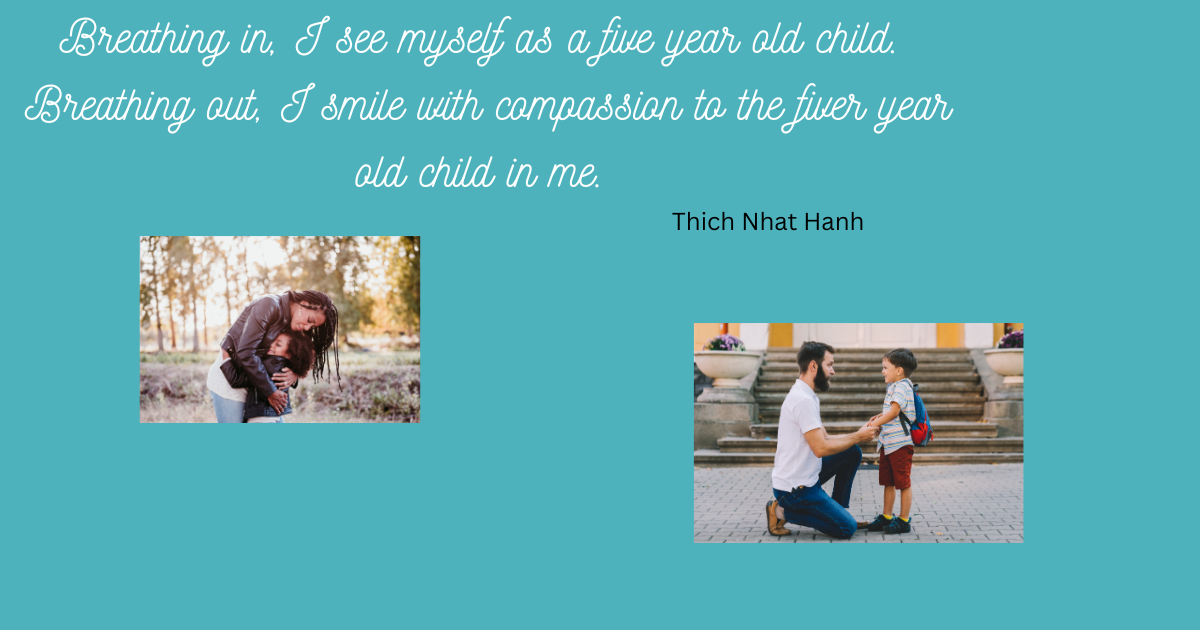
I also incorporate inner child work and reparenting practices. Often when a client describes a reaction that felt “bigger than the situation,” I’ll ask, “How old did you feel in that moment?” Many say they felt very young. From there, we explore what was happening developmentally during that time and offer that younger self compassion rather than criticism. Instead of shaming the reaction, we honor it as a signal — an invitation to care for something tender within.Through guided imagery, letter writing, and visualization, clients return to younger parts of themselves and offer the nurturing, protection, and validation that may have been missing. There is something profoundly healing about imagining yourself stepping into the scene — not alone this time, but supported by your present-day wisdom and strength.Reconciliation by Thich Nhat Hanh has several practices clients can incorporate into their mindfulness practice to facilitate inner child healing.
Healing from C-PTSD takes time. These patterns formed over years. And healing, too, unfolds over time. I’m not sure we ever completely erase our trauma, but I do believe we can transform our relationship to it.
Over time, we learn to recognize when we are activated. We learn to soothe our nervous system. We learn to return to center. We begin to trust that even when we feel triggered, we are not broken — we are responding from an old place that once needed protection.
And slowly, something shifts.
We move from surviving to living.From shame to compassion.From fragmentation to integration.
Healing becomes less about “getting over it” and more about coming home to ourselves — again and again.